

Corinne PETIT
Chargée de Recherche CNRSCoordonnées
Thèmes de recherche
Summary of research activities
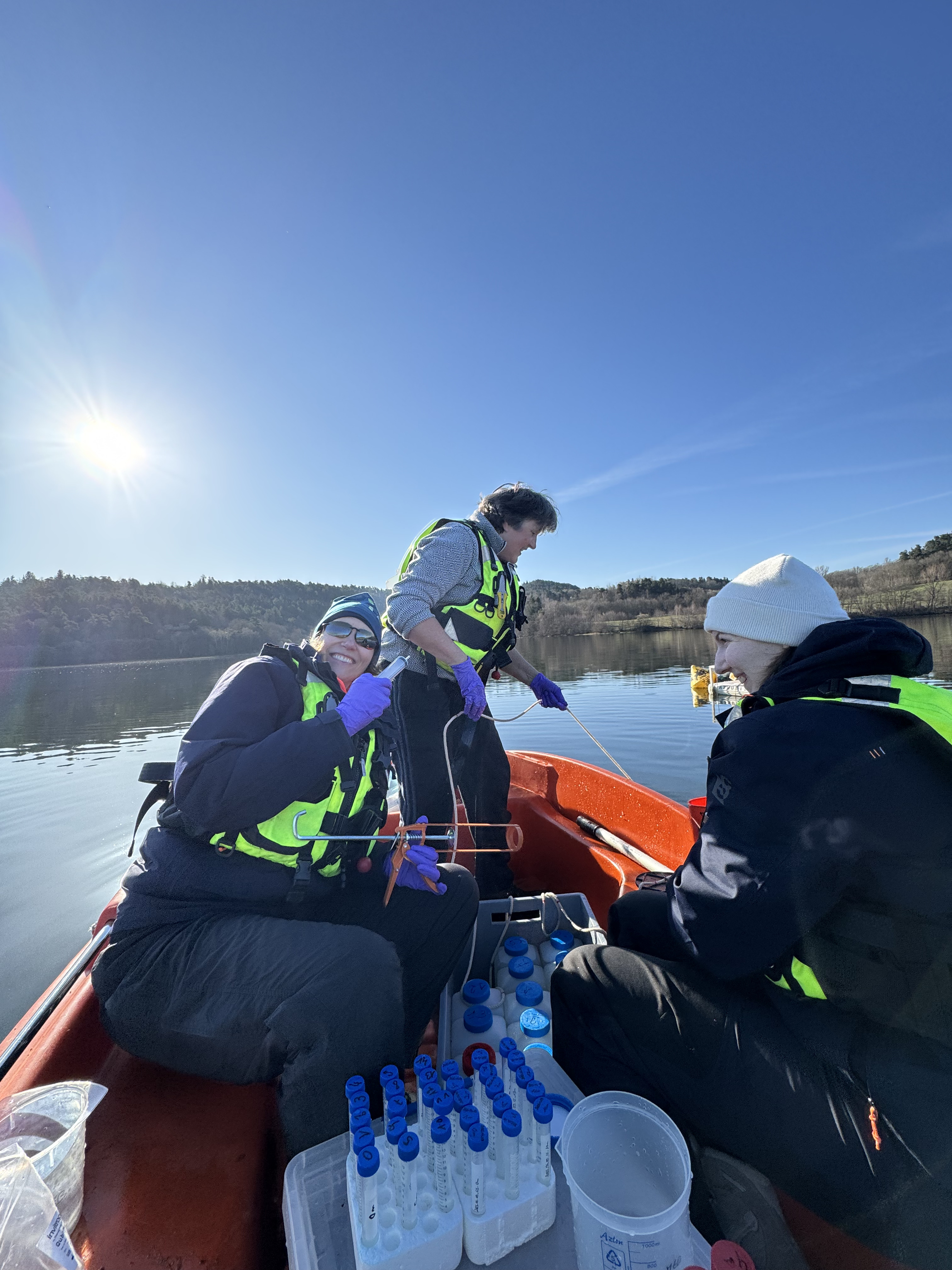
I am a microbiologist specializing in microbial ecology of stratified aquatic environments and environmental genomics. My research focuses on the characterization of microbial communities involved in biogeochemical cycles—particularly the methane cycle—in anoxic ecosystems. I employ molecular and genomic approaches (functional gene markers, metagenomics, pangenomics) but also culture approaches to investigate microbial diversity, metabolic potential, and adaptation in natural environments. My work enhances our understanding of microbial contributions to greenhouse gas dynamics and the functioning of deep aquatic ecosystems.
Ongoing projects:
- ANR project DIAMOND (2024-2028): The project DIAMOND aims to enhance our knowledge on the dynamics of microbial diversity (eukaryotes, bacteria, archaea) and adaptation in response to O2 depletion, as well as on the functioning and resilience of freshwater lakes.
- ANR project Metha-Nov (2025-2028): The primary aim of the project is to propose an innovative renewable energy production method involving in-situ methanation, specifically designed to operate at ambient temperatures. This method will leverage syntrophic interactions within a synthetic microbial consortium to produce biogas, with a focus on generating bio-methane (CH4) with lowcarbon dioxide (CO2).
- European collaboration : Pelagics project (2020-2024): Freshwater habitats are critical for all terrestrial life, yet the vast majority of their microbial inhabitants (pro- and eukaryotes) remain enigmatic, outside the bounds of cultivation. The recent development of novel cultivation methods, coupled with advances in sequencing now provides an opportunity to finally unravel freshwater microbial diversity. The PELAGICS project plans a coordinated pan-European sampling campaign (70 lakes) with 24 collaborating scientists from 16 European countries. The main aim is for stable cultivation and whole-genome sequencing of 500 prokaryotes and 50 unicellular eukaryotes. Moreover, terabyte scale deep-metagenomic sequencing (ca. 18 TB) will allow recovery of thousands of metagenome-assembled genomes for pro-, eukaryotes and viruses. This large-scale effort will finally uncover the microbial diversity (pro- and eukaryotes), their natural interactions and ecological roles in aquatic food webs.
Orcid:
https://orcid.org/0000-0001-7962-4171